For when you’re ready; ready to get well; ready to stop spinning in circles; ready for change that lasts.
Fees & FAQs
How much does therapy with you cost?
I charge £90 per 50-minute session.
I also currently have some lower-cost spaces available for those on low or no income.
Where’s your office?
Do you offer online therapy?
Yes — I offer online sessions via Zoom.
I primarily work online with clients based in the UK, though I may also be able to work with clients overseas.
Do you offer bi-weekly sessions?
Yes, but not intially. For the work I offer, a strong therapeutic relationship is required and, for me, bi-weekly sessions don’t allow for that to develop. Once a good working relationship is in place and you feel you’ve done the deeper work you require, we can then move to bi-weekly.
Do I need to be sober to attend sessions?
Yes. I ask that you attend sessions without having used drugs or alcohol beforehand.
Drugs and alcohol can affect inhibitions and emotional regulation, and I want to help create a space where you feel safe, grounded, and able to reflect clearly.
How do I know if my drinking or using is actually a problem?
You don’t need to have “lost everything” for something to be a problem.
If you find yourself repeatedly doing things you don’t want to do, struggling to stop using drugs & alcohol or behaviours to cope emotionally, or feeling increasingly ashamed, isolated, anxious, or out of control, it may be worth exploring further.
Therapy can provide a space to look honestly at your relationship with substances, behaviours, and coping — without judgement or pressure.
Will I finally feel safe saying everything, without worrying you’ll look at me differently?
In my experience, yes — though that safety often takes time to build.
Many clients begin feeling safer fairly early on, but not necessarily safe enough to say everything immediately. Trust develops gradually, and there’s no pressure to disclose more than feels manageable.
But it is possible to arrive at a place where you no longer feel you have to hide.
Will you make me talk about all my trauma?
No. The choice of what you talk about will always remain yours.
I may gently enquire or challenge at times, but I will always respect your autonomy and pace.
And if and when you do want to explore painful experiences, we’ll do so carefully — with attention to how they may still be affecting you in the present, rather than simply reopening old wounds.
If I tell you how much I’m really drinking or using, will you think I’m a lost cause?
Not at all.
How much you’ve been drinking or using matters far less to me than your ability to begin being honest about it.
I’ve known people who believed they were beyond help go on to find recovery and meaningful change.
Are you going to judge me for the things I’ve done when I’ve been high or drunk?
No.
My role is not to judge, but to listen and help you better understand what’s happened and why.
Most people struggling with addiction carry a great deal of shame, and shame tends to grow in secrecy. I also have my own past and understand what it’s like to look back on certain experiences with regret or pain.
What if I try and stop and fail — will you give up on me?
No.
Relapse can be part of many people’s recovery journeys and is nothing to be ashamed of.
Rather than treating relapse as failure, we can try to understand what happened, what the addiction may have been trying to achieve, and what support or changes may be needed moving forward.
If I talk about the hook-ups, the secrets, or the things I’ve hidden… will you still see me as a person worth helping?
I will.
I believe people are far more than the things they’ve done, the coping mechanisms they’ve developed, or the shame they carry.
My role is not to condemn you, but to help you understand yourself with greater honesty, compassion, and clarity.
Shame tends to lose its power when it can finally be spoken about openly and met without judgement.
Do you offer short-term or open-ended therapy?
I primarily offer open-ended therapy. In my experience, recovery from addiction, shame, and codependency often involves deeper relational work that can be difficult to achieve within a short-term model.
How do I know if I’m an ‘addict’?
I see addiction as involving two key elements:
A loss of control once you start using — whether that's how much you use, how long you use for, or both.
An inability to stay stopped on your own, despite the mounting consequences.
You may also notice that you're chasing how drugs or alcohol used to make you feel, that using is becoming more and more of a priority, or that you're abandoning activities you once enjoyed — such as hobbies, exercise, relationships, or work — because of your substance use.
Many people find themselves doing things they swore they would never do, making promises they can't keep, or repeatedly trying to cut down or stop, only to find themselves returning to the same patterns.
I understand that the words "addict" and "addiction" can carry stigma and shame.
For me, identifying as an addict was empowering. It helped me move beyond denial and name the problem honestly. Once I could see what I was dealing with, I was able to start doing something about it.
That said, whether or not you choose to identify as an addict is entirely your choice. The more important question is whether drugs, alcohol, or other behaviours are having a negative impact on your life and whether you're finding it difficult to change them by yourself.
Will I have to go fully abstinent?
That will ultimately be your choice.
Some of the clients I work with have found that they can change their relationship with a particular substance while continuing to use others without difficulty. Others discover that complete abstinence is the safest and most supportive path for them.
My role is not to tell you how you should live your life, but to help you explore your relationship with substances honestly and openly. I will respect your autonomy and support you in discovering what recovery looks like for you.
At the same time, part of my role is to gently challenge denial or minimisation where I believe it may be getting in the way of meaningful change. If I think complete abstinence may be the most realistic route to recovery, I will be honest about that, while recognising that any decisions you make will always remain your own.
How do I know if I'm codependent?
Many people assume codependency simply means being "too dependent" on other people, but it can show up in lots of different ways.
You may find yourself prioritising other people's needs over your own, struggling to set boundaries, fearing rejection, losing yourself in relationships, people-pleasing, seeking validation, or finding it difficult to identify and express your own wants and needs.
Therapy can help you explore these patterns and understand where they come from.
Why do I always feel like I'm not good enough?
Many people who come to therapy carry a persistent sense that they are somehow "less than" other people, fundamentally flawed, or never quite good enough, no matter what they achieve.
These feelings often have deep roots. They can develop through experiences such as criticism, bullying, rejection, emotional neglect, trauma, addiction, discrimination, or constantly feeling different from those around us. Over time, we can begin to internalise these experiences and come to believe that the problem is not what happened to us, but who we are.
This is often what therapists mean when we talk about shame.
As a result, many people spend years seeking validation from relationships, achievement, sex, work, appearance, or other people's approval, hoping that finally feeling "good enough" will bring relief.
Therapy can help you understand where these beliefs came from, challenge the stories you've been carrying about yourself, and gradually discover that you are intrinsically "good enough".
If I start therapy, will everything unravel?
Many clients have told me they're frightened to start pulling at threads in therapy because they're worried everything will fall apart.
It's something I understand.
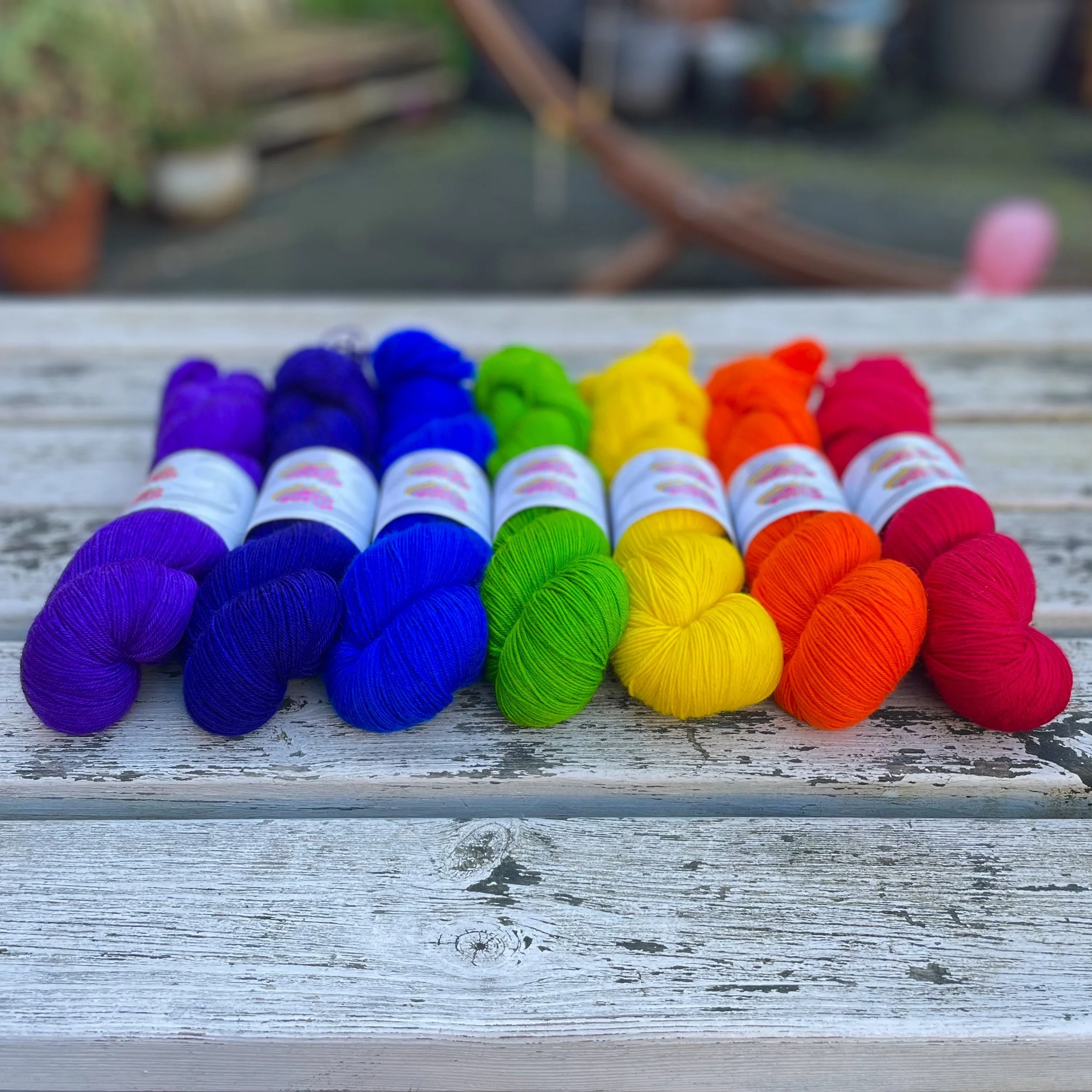
As someone who knits, I often think about recovery and therapy in similar terms. Sometimes, when you've made a mistake in a piece of knitting, you need to "frog" it —carefully undoing your work until you reach the point where the mistake was made and then fixing it. Only then can you move forward.
Sometimes, the yarn that was pulled out can end up in a tangled pile. Pulling harder rarely helps. What’s needed is patience, care, curiosity, and time to gently work through the knots.
Therapy is often much the same.
The aim isn't to unravel your entire life or leave you overwhelmed. It's to help you safely explore the patterns, wounds, coping mechanisms, and beliefs that may no longer be serving you, at a pace that feels manageable.
And just as a tangled pile of yarn can become something beautiful and useful again, the parts of ourselves that feel messy, broken, or confusing can often begin to make sense when they're given enough attention, compassion, and understanding.
What if therapy doesn’t feel like it’s working?
Therapy doesn’t always move in a straight line. There may be periods when things feel clearer or easier, and others when you feel frustrated, uncertain, or as though you’re going over the same ground.
That doesn’t necessarily mean nothing is changing, but it’s important that we talk about it rather than assume you should simply keep going. We can look together at what feels unhelpful, whether anything needs to change in how we’re working, and whether therapy still feels right for you.
What if I feel misunderstood, irritated, or disagree with you?
Please tell me.
You’re not expected to agree with everything I say, and questioning an interpretation doesn’t make you difficult or uncooperative.
I may sometimes misunderstand you, make an incorrect assumption, or phrase something badly. Talking about it gives me the chance to listen more carefully, acknowledge when I’ve got something wrong, and better understand what has happened between us.
Working through those moments can become an important part of therapy.
What if I start wanting to avoid sessions or stop therapy?
You’re free to decide whether therapy continues.
At the same time, wanting to cancel, becoming quieter in sessions, or feeling tempted to leave can sometimes happen when the work feels uncomfortable, exposing, or disappointing.
Rather than assuming either that you should force yourself to continue or that therapy has failed, I would encourage us to talk about what has changed. The decision remains yours, but understanding the urge to pull away may tell us something important about what you need or what is happening between us.
How does therapy end?
You can choose to end therapy at any time.
Where possible, I believe it’s helpful to talk about the ending rather than stopping without discussing it. Ending therapy can bring up relief, sadness, anxiety, disappointment, or uncertainty. It can also give us an opportunity to look at what has changed, what may remain unfinished, and what you want to take with you.
Discussing the ending doesn’t commit you to staying. It simply allows us to bring the work to a more open and thoughtful close.